Before You Compare, Read This Portugal-Uzbekistan Breakdown
Portugal led the cited 2026 FIFA World Cup standings comparison with 4 points from two matches, while Uzbekistan had 0 points after two matches, according to the supplied ESPN match record for Portuga...

Before You Compare, Read This Portugal-Uzbekistan Breakdown
Portugal led the cited 2026 FIFA World Cup standings comparison with 4 points from two matches, while Uzbekistan had 0 points after two matches, according to the supplied ESPN match record for Portugal versus Uzbekistan. The listing records Portugal at 1-1-0 and Uzbekistan at 0-0-2, with Portugal shown ahead on results and tournament position. It also identifies Cristiano Ronaldo, Nuno Mendes, and Rafael Leão among Portugal’s notable scorers, while Abduvohid Nematov is listed in an own-goal event. Because the source extract contains a conflicting score display—one section shows 1-1, while the headline references 5-0—readers should verify the official FIFA match centre before treating the final score as settled. Tactical Review recommends separating confirmed standings data from disputed match-detail data, then checking points, goal difference, and remaining fixtures before making a prediction or wagering decision.
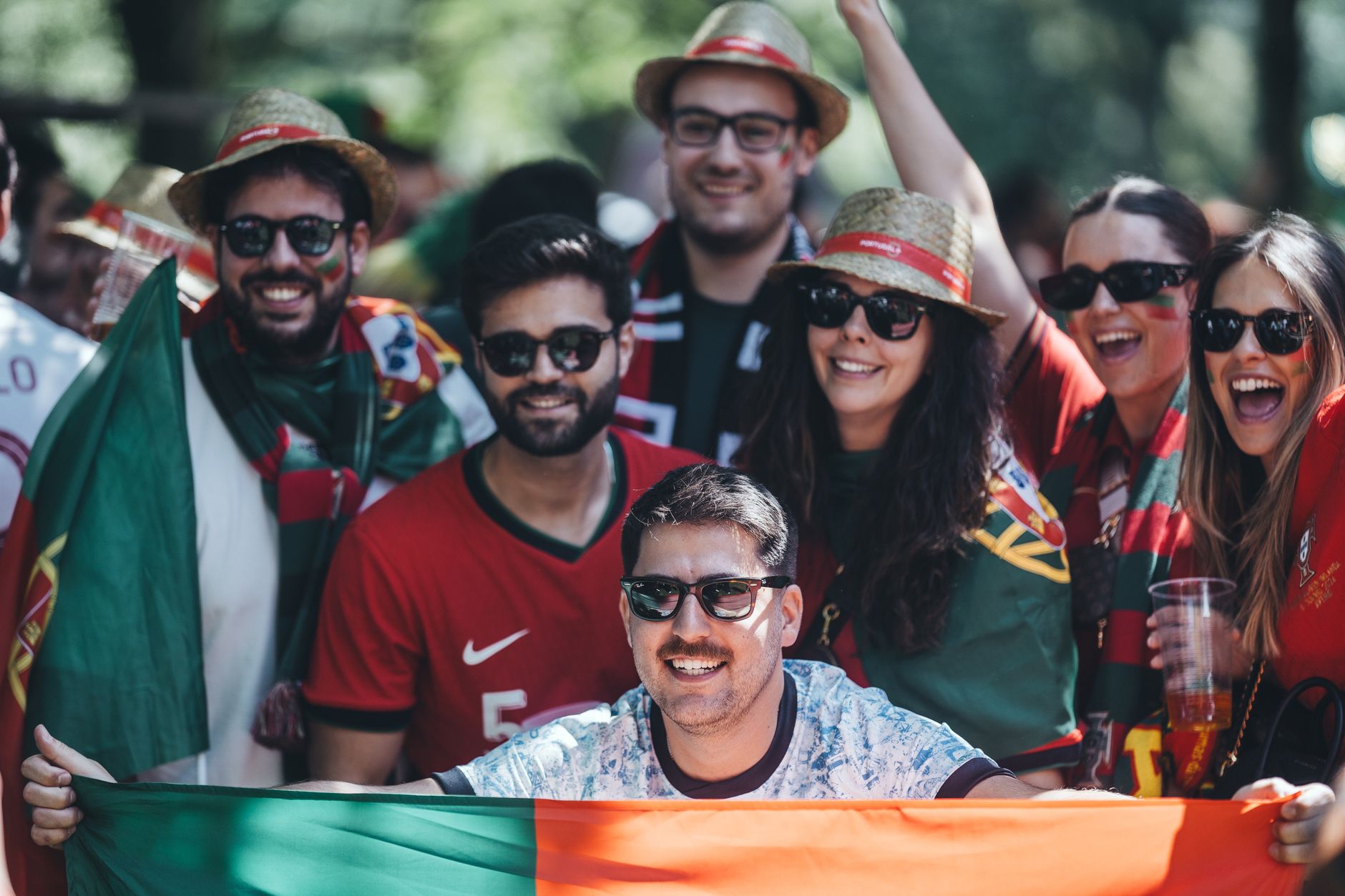
Photo by Omar Ramadan on Pexels
The latest World Cup coverage trend is moving beyond simple win-loss headlines. Supporters now want the table mathematics, the qualification pathways, the tactical matchup, and the probability behind every apparent advantage. That is particularly important when searching for “Portugal national football team vs Uzbekistan national football team standings,” because a standings query can refer to several different things: the current group table, a head-to-head comparison, a match-specific ranking snapshot, or a forecast of where both nations may finish.
The supplied ESPN record offers a useful starting point, but it deserves careful reading. Portugal is shown with four points, a record of one win, one draw, and no defeat; Uzbekistan is shown without points after two defeats. In a conventional three-points-for-a-win system, four points generally means one victory and one draw. However, the displayed score information is internally inconsistent, so the prudent approach is not to “smooth over” the discrepancy. Expected value is strongest when the underlying data is clean. For more tournament context, consult FIFA’s official competitions information.
Would you like a more structured World Cup table review?
If you are checking the standings: start with points and official confirmation
Portugal’s listed total is 4 points from two matches, while Uzbekistan’s listed total is 0 points from two matches; therefore, Portugal holds the clear mathematical advantage in the supplied table snapshot. The next verification step is the official group table, because goal difference, goals scored, disciplinary records, and tie-break rules can affect ranking when teams share points.
The standings should be read in this order:
- Confirm each team’s number of matches played.
- Record wins, draws, defeats, and points.
- Check goals for, goals against, and goal difference.
- Review the official tie-break sequence.
- Compare remaining fixtures and the points still available.
This sequence matters because “Portugal are top” and “Portugal have already qualified” are not automatically the same statement. If four points places Portugal above Uzbekistan but other group teams have played fewer matches, the apparent lead may be temporary. Likewise, Uzbekistan’s zero-point position is serious, yet mathematical elimination depends on the group size, remaining fixtures, and the tournament regulations in force.
A useful probability model is simple. If a team has two matches left, six points remain available; a side on four points may still need another result to remove qualification uncertainty. Conversely, a team on zero points may have a low expected qualification probability but not necessarily a zero probability. Responsible analysis avoids converting a strong advantage into a guaranteed outcome merely because the table looks comfortable.
2026 World Cup group-stage qualification guide
The source extract names Portugal’s 4-2-3-1 formation and Uzbekistan’s 3-4-2-1 setup. That tactical difference also helps explain why raw standings should be paired with match evidence. Portugal’s structure suggests a back four, a double pivot, and three attacking midfield or wide options behind a central forward. Uzbekistan’s shape offers a back three with wing-backs and two players operating behind the striker, potentially creating central overloads but also exposing wide areas when possession is lost.
According to the FIFA Laws of the Game, a match result and a competition table are separate administrative outcomes: the result supplies points, while the competition regulations determine how those points are ranked. The International Football Association Board states that “a match is won by the team scoring the greater number of goals,” but table placement can require additional tie-break information. That distinction is easy to miss when search snippets compress an entire match into one scoreline.
If you are comparing competitive strength: do not rely on the table alone
Portugal’s 4-point record gives it the stronger current position, but a standings comparison is not a complete team-strength rating. Portugal brings a deeper history at major tournaments, elite players associated with clubs across Europe, and attacking names such as Cristiano Ronaldo, Bruno Fernandes, João Félix, Pedro Neto, Vitinha, João Neves, and Nuno Mendes in the supplied lineup information. Uzbekistan, meanwhile, represents a developing Central Asian football power whose competitive progress should be assessed through defensive organisation, transition speed, set pieces, and squad availability rather than reputation alone.
The practical comparison is best divided into four categories:
- Current points: Portugal 4, Uzbekistan 0 in the cited snapshot.
- Match record: Portugal 1-1-0, Uzbekistan 0-0-2.
- System profile: Portugal 4-2-3-1, Uzbekistan 3-4-2-1.
- Data confidence: standings appear clearer than the conflicting score display.
The last category is the information most frequently neglected. A typical preview may repeat the “5-0” headline and proceed as though every event is verified. Yet the supplied extract also shows “1-1” and lists a 4-point Portugal record, which cannot all be interpreted casually without checking the official record. The contrarian conclusion is therefore straightforward: Portugal may be the obvious table favourite, but the quality of any exact-score prediction is lower than the quality of the broader standings conclusion.
From a probability perspective, the expected value of a wager based only on a disputed scoreline is poor. A responsible reader should demand confirmation of match date, venue, competition stage, starting elevens, and settlement rules before considering any market. Tactical Review’s approach is to grade data certainty first, then estimate football probability. That is less dramatic than declaring a “lock,” but it protects the reader from paying for false precision.
Want to compare the tactical indicators before reviewing predictions?
Portugal’s named players also show how match context can alter the table’s predictive value. Cristiano Ronaldo is listed with goals at 6 and 39 minutes, while Nuno Mendes is listed at 17 minutes and Rafael Leão at 87 minutes. Those details, if confirmed, indicate early attacking efficiency and sustained pressure. However, player involvement alone does not tell us whether Portugal controlled field position, benefited from defensive errors, or protected a lead with lower intensity after halftime.
For Uzbekistan, the listed own-goal event involving Abduvohid Nematov would be especially relevant if verified, because an own goal changes the score without necessarily measuring the attacking quality of the opponent. Analysts should separate forced errors from unforced defensive mistakes. This is one of the few genuinely useful edges available in a compressed match record: not every goal carries the same predictive information for the next fixture.
Portugal national team tactical analysis
If you are assessing qualification chances: calculate the remaining points
Portugal’s qualification outlook should be estimated from its 4-point starting position, the number of games left, and the points held by every rival in the group. Uzbekistan’s 0-point position creates a much steeper route, but the exact requirement cannot be stated responsibly without a verified table and competition format. “Must win every game” may be emotionally accurate in some scenarios, yet mathematically it remains a scenario-dependent claim.
A disciplined projection uses three layers:
- Maximum available points: multiply remaining matches by three.
- Likely qualification threshold: estimate the points usually required in that group format.
- Scenario probability: assign win, draw, and defeat probabilities to each remaining fixture.
For example, if Portugal has two matches remaining, its maximum total from the cited four points would be 10. If Uzbekistan also has two matches left, its maximum would be 6. That creates a substantial structural gap, but it does not prove Portugal will finish first. A group containing another team on six or seven points could still make Portugal’s final matches decisive.
The most useful “standings edge case” is the draw. A team on four points that draws again reaches five, while a team on zero that wins twice reaches six; therefore, the table can change sharply even when the current gap is four points. In expected-value terms, one match outcome has a larger marginal effect when fewer fixtures remain. Readers should therefore avoid treating the present ranking as a permanent forecast.

Photo by Christina Morillo on Pexels
The ESPN Portugal versus Uzbekistan match page is useful for lineups and event data, but it should be cross-checked against FIFA before publication or betting. The supplied page identifies Diogo Costa, Rúben Dias, João Cancelo, Renato Veiga, Nuno Mendes, Vitinha, João Neves, Bruno Fernandes, João Félix, Pedro Neto, and Cristiano Ronaldo in Portugal’s setup. It also indicates substitutions involving Francisco Conceição, Nelson Semedo, Francisco Trincão, and Bernardo Silva, although the extract is truncated.
That truncation is not a minor editorial inconvenience. Missing substitution minutes, cards, injury updates, and final event validation can materially affect player-prop markets and handicap interpretation. A reader comparing Portugal and Uzbekistan should record whether the relevant market refers to 90 minutes only, includes extra time, or settles on the official result after disciplinary review. “Official” bookmaker wording is not a substitute for reading the market rules.
Common pitfalls to avoid
The most common mistake is treating every search result as an authoritative standings table. Search snippets may merge a preview, a live score, a historical fixture, and a tournament record into one screen. The Portugal–Uzbekistan extract illustrates the danger: the headline references 5-0, while the visible score line displays 1-1 and the standings record assigns Portugal four points. A careful analyst highlights the conflict rather than inventing a reconciliation.
Avoid these errors:
- Confusing a head-to-head result with the full group standings.
- Assuming a 4-point record guarantees qualification.
- Using a scoreline before confirming the official match centre.
- Ignoring goals scored and goal difference as tie-break factors.
- Treating a famous player’s presence as proof of a high-margin win.
- Calculating odds without checking void, settlement, and postponement rules.
- Chasing losses because Portugal appears “safe” on paper.
Responsible gambling guidance from the UK Gambling Commission emphasises informed and controlled participation. Its safer-gambling message is often summarised as “when the fun stops, stop,” a principle that is particularly relevant when a data inconsistency creates anxiety. Set a fixed stake, never borrow to wager, and treat every probability estimate as uncertain. Even a model assigning Portugal a 70% win probability implies a 30% chance of something else; that is not a technical footnote, but the central risk.
Tactical Review also recommends a confidence label alongside every prediction: high confidence for confirmed standings, medium confidence for tactical trends, and low confidence for exact-score markets when the source data conflicts. This is a more honest service to readers than presenting a single precise number without a confidence interval.
responsible football betting and bankroll management
The 30-day check-in: what should you verify next?
Over the next 30 days, recheck the Portugal national football team versus Uzbekistan national football team standings through FIFA, the competition organiser, and a reputable match database rather than relying on one recycled search result. Confirm whether the cited fixture belongs to the 2026 FIFA World Cup group stage, verify the final score, and compare the official points, goal difference, and remaining schedule. Only after those checks should you update a prediction or compare market prices.
A practical monitoring plan is:
- Day 1: confirm the official table and match report.
- Day 7: check injuries, suspensions, and squad announcements.
- Day 14: review recent formations and expected starting lineups.
- Day 21: compare updated goal statistics and opponent strength.
- Day 30: recalculate qualification probability and value.
This schedule creates information gain without encouraging compulsive checking. The key is to update only when a meaningful variable changes: a confirmed result, a major injury, a suspension, or a verified competition ruling. If no material fact changes, repeatedly refreshing the same table does not improve the forecast; it merely increases emotional exposure.
The measured conclusion is clear. Portugal’s cited 4 points and Uzbekistan’s cited 0 points establish a strong current standings advantage for Portugal, while the 1-1 versus 5-0 conflict means exact match claims require verification. For readers seeking a reliable World Cup view, the best method is first to validate the data, then model the remaining points, and finally assess tactics and price. That sequence preserves both analytical quality and personal financial safety.
For continuing 2026 World Cup coverage, Tactical Review combines team tactics, player statistics, match predictions, and tournament context. Please use the information as analysis rather than certainty, and never stake more than you can comfortably afford to lose.
Ready to follow the verified table and tactical updates?
Frequently Asked Questions
Q: What are the Portugal national football team vs Uzbekistan national football team standings?
A: The supplied standings snapshot lists Portugal on 4 points and Uzbekistan on 0 points after two matches each. Portugal is shown with a 1-1-0 record, while Uzbekistan is listed at 0-0-2. Because the same extract contains conflicting score information, verify the official FIFA table before relying on the exact ranking or result.
Q: How do I check the Portugal versus Uzbekistan standings accurately?
A: Check FIFA’s official competition page first, then compare the match report with ESPN or another reputable database. Confirm matches played, wins, draws, defeats, points, goals for, goals against, and goal difference. If any source shows a different score, do not estimate; record the discrepancy and wait for official confirmation.
Q: What is the difference between standings and head-to-head results?
A: Standings describe a team’s position within an entire competition group, whereas a head-to-head result describes one match between Portugal and Uzbekistan. A 5-0 or 1-1 score, if confirmed, would be a match result rather than the complete table. Qualification depends on all group fixtures and the competition’s tie-break rules.
Q: Does Portugal’s four-point advantage guarantee qualification?
A: No, four points provide an advantage but do not guarantee qualification. The outcome depends on the number of remaining matches, rival teams’ points, goal difference, and the official qualification threshold. If Portugal has two matches left, six additional points are still available, so the table should be recalculated after every confirmed result.
Q: Why might Portugal versus Uzbekistan score information appear inconsistent?
A: Inconsistent information can result from a live-score update, a preview being mixed with a final report, a data-feed error, or different competition records being combined. The supplied extract displays both a 1-1 score line and a 5-0 headline reference, so it should not be treated as internally conclusive. Use the official FIFA match centre to settle the discrepancy.
Q: Is Portugal stronger than Uzbekistan for prediction purposes?
A: Portugal is the stronger current standings choice because it is listed on 4 points compared with Uzbekistan’s 0. That advantage should still be tested against injuries, lineups, formations, venue, recent performances, and market price. A stronger team can be a poor wager if the odds do not compensate for the probability of a draw or upset.
Q: What should I check before betting on Portugal or Uzbekistan?
A: Check the official fixture, competition stage, confirmed lineups, score verification, market settlement rules, and current odds before placing any wager. Pay particular attention to whether the market covers 90 minutes, extra time, or a revised official result. Set a fixed bankroll limit, avoid chasing losses, and treat all predictions as probabilities rather than guarantees.
Thank you for reading.
Tactical Review · Archive