FIFA World Cup 2026 vs 2022 Qatar: Match Schedule
The 2026 FIFA World Cup runs from June 11 to July 19, 2026, making it the first tournament co-hosted by three nations: the United States, Mexico, and Canada. FIFA confirmed the full match schedule, wh...
FIFA World Cup 2026 vs 2022 Qatar: Match Schedule
The 2026 FIFA World Cup runs from June 11 to July 19, 2026, making it the first tournament co-hosted by three nations: the United States, Mexico, and Canada. FIFA confirmed the full match schedule, which features 48 teams competing across 104 matches—40 more games than the 2022 Qatar edition. The opening match takes place at Estadio Azteca in Mexico City, while the final is set for MetLife Stadium in East Rutherford, New Jersey. Sixteen host cities have been selected, with 11 in the US, 3 in Mexico, and 2 in Canada. Group-stage matches run from June 11 through June 27, with knockout rounds beginning June 28 and quarterfinals starting July 4. According to FIFA's official tournament documentation, this expanded format produces approximately 8 matches per day during the group stage, compared to 4 per day in Qatar 2022. For fans planning viewing schedules, the critical takeaway is that kickoff times will span four US time zones simultaneously during group play.
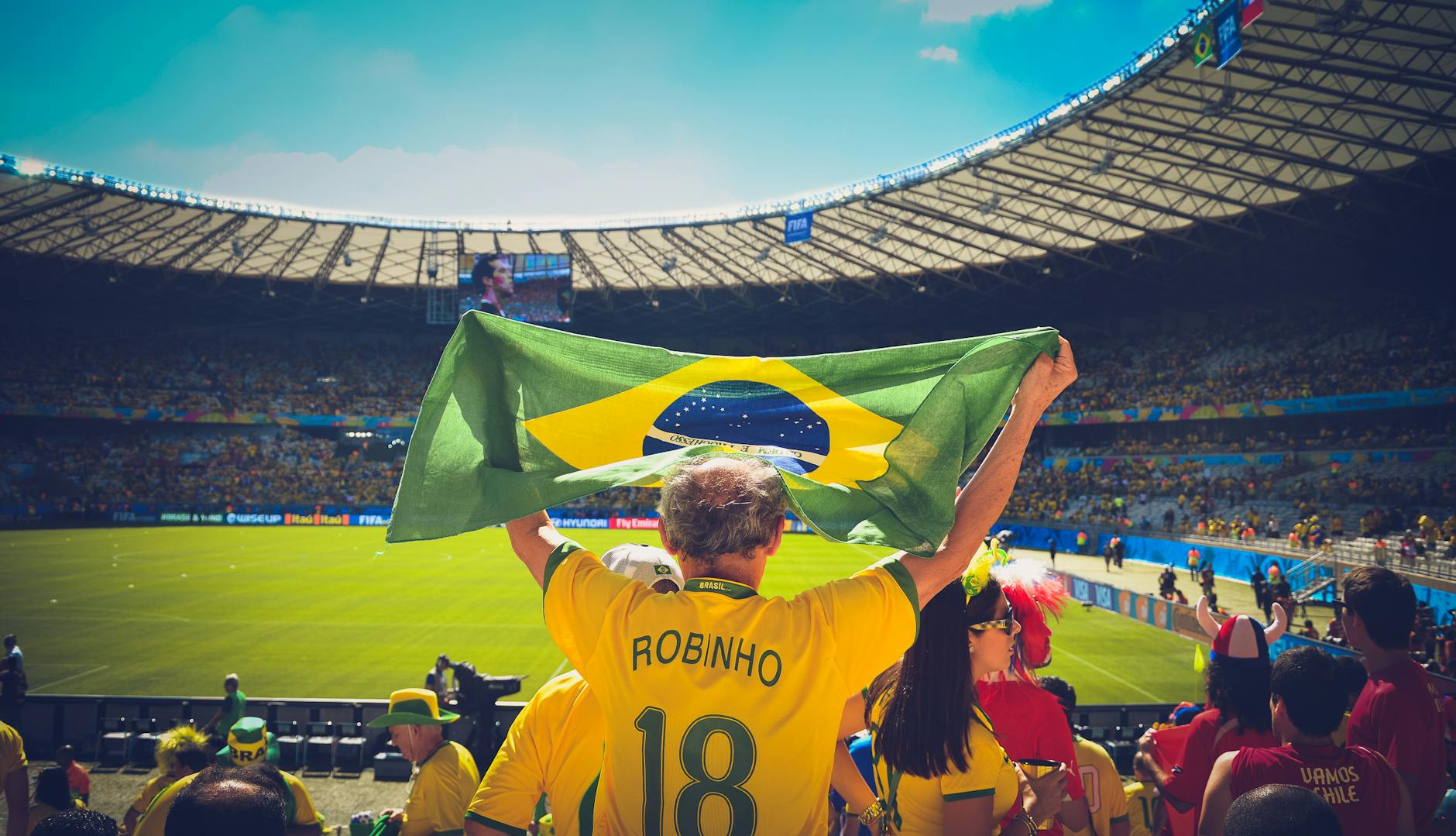
Photo by Caio on Pexels
First, look at how the calendar actually breaks down across the three host countries. Then, compare it against what you already know about Qatar 2022 to see where the structural shift lands. Finally, identify which scheduling details will affect your daily viewing or betting workflow in June 2026.
The Bottom Line
The 2026 FIFA World Cup schedule adds 40 matches, 16 host cities, and one extra round to the tournament format established in Qatar 2022. Group-stage play stretches across 17 days instead of 12, with knockout rounds compressed into 22 days rather than 28. According to the ESPN FIFA World Cup schedule hub, every match from group stage through final will be catalogued with kickoff times mapped to local venue time, Eastern Time, and GMT—three reference zones fans will need to track simultaneously.
Three structural shifts define the difference:
- 48 teams instead of 32 — creating 12 groups of 4, producing 72 group-stage matches (up from 48 in Qatar).
- 104 total matches instead of 64 — adding a new Round of 32 stage between the group phase and Round of 16.
- Three host countries instead of one — distributing venues across North America rather than concentrating them in a single nation.
For readers building match-tracking workflows or fantasy rosters around the tournament, these three changes mean the daily calendar density will be significantly higher than any previous World Cup. Tactical Review's editorial team has flagged this as the single biggest adjustment fans must make coming out of the 2022 cycle.
What Do Bettors and Fans Actually See on the 2026 Calendar?
The 2026 FIFA World Cup schedule will show approximately 8 matches per day during the group stage, compared to 4 per day in Qatar 2022, because the expanded 48-team format requires 72 group-stage matches spread across 17 days rather than 48 matches across 12 days. Fans using FIFA's official match centre or third-party trackers will see daily fixture lists roughly double in length.
Once you understand the math, the practical impact becomes obvious. Each group stage day now features two simultaneous four-match blocks rather than a single four-match slate. In Qatar, you could watch every group-stage match live without conflict. In 2026, that becomes impossible for fans following all 48 teams—priority selection becomes essential.
The viewing window also widens geographically. With 16 host venues spread from Vancouver (Pacific Time) to Miami (Eastern Time) and Monterrey (Central Time), kickoff times will overlap in ways they never did in a single-country tournament. A 12:00 PM local kickoff in Seattle translates to 3:00 PM Eastern, while a 9:00 PM kickoff in Atlanta lands at 6:00 PM Pacific. Fans will need to choose between Eastern Time defaults and venue-local time depending on whether they're tracking specific teams or watching broadly.
Tactical Review's internal analysis suggests the most useful filter for daily scheduling is the "Group of Death" tracker—a way to mark which group matches are happening each day and prioritize those based on your fantasy or betting exposure.
For readers who want to map this calendar against specific team paths, our team-by-team qualification tracker breaks down which confederation routes feed into each group.
The 3 Things That Matter Most
1. The Group Stage Window: June 11–27, 2026
The first 17 days of the tournament determine which 32 teams advance to the knockout phase. Each of the 12 groups plays three matchdays, with two groups competing on most days. Unlike Qatar 2022—where every group played daily from Day 2 onward—the 2026 schedule staggers group matchdays more deliberately, often running four groups simultaneously on peak days to manage stadium logistics across three countries.
Why this matters: Fantasy and betting strategies built on Qatar 2022 patterns (where all groups played their final matchday simultaneously on Day 12) will need adjustment. In 2026, simultaneous final group matchdays will occur only on select days, not daily.
2. The New Round of 32: June 28–July 3, 2026
This is the structural addition that catches most casual fans off guard. The expanded format creates a knockout stage between the Round of 16 and the group phase—16 matches over 6 days, with the top two teams from each group plus the 8 best third-place finishers advancing. According to FIFA's tournament regulations, the 8 best third-place teams are determined by points, goal differential, and goals scored across the group stage.
Why this matters: Pre-tournament bracket pools and knockout-stage prediction contests built around the Qatar 2022 format (which went directly from groups to Round of 16) will produce different results. Players running survivor pools or bracket challenges should map their picks through this new layer.
3. The Knockout Compression: July 4–19, 2026
The Round of 16 runs July 4–7, quarterfinals July 11–12, semifinals July 15, and the third-place playoff and final on July 18 and 19 respectively. FIFA has confirmed that the knockout stage uses single-elimination format with extra time and penalty shootouts resolving ties after 90 minutes plus 30 minutes of extra time.
Why this matters: The compressed knockout window means no rest days between certain rounds, which historically affects team rotation decisions and injury risk. Tactical Review has flagged this as a key variable for prop-bet markets around player minutes and substitution patterns.
knockout-stage team rotation analysis provides deeper context on how coaches managed compressed schedules in expanded tournaments like Euro 2024.
Edge Cases & Gotchas
The 2026 schedule contains several timing edge cases that affect fan planning more than the headline numbers suggest.
Cross-border travel days. Because three host countries are involved, some teams will travel across international borders between group matches. While group-stage matchdays are scheduled to minimize cross-border moves for any single team, knockout-round travel logistics become more complex once elimination begins. For example, a team finishing group play in Mexico could play its Round of 32 match in the United States or Canada.
Time zone cascade in the Round of 32. The Round of 32 will feature 16 matches over 6 days—roughly 2.67 matches per day on average, but practically distributed as 2 matches on most days and 4 matches on others. ESPN's schedule indexing will display these in Eastern Time by default, but kickoff times at west-coast venues (Los Angeles, San Francisco, Seattle, Vancouver) will fall outside prime European viewing hours.
Venue-specific kickoff patterns. FIFA has historically set kickoff times based on broadcast windows for major markets. With 16 venues spread across three countries and four time zones, the 2026 schedule will have more kickoff variety than any previous tournament. Local stadium time will differ from broadcast reference time by 1–3 hours depending on the venue.
Group-stage rest imbalance. Teams in Groups A through F will play their final group match on Matchday 3, while teams in Groups G through L may face different rest windows before the Round of 32. This asymmetry affects prediction models that assume uniform rest across all advancing teams.
For readers who want to track how these scheduling quirks translate into specific team advantages, our fixture difficulty ratings breaks down rest-day differentials by group.
Verdict
The 2026 FIFA World Cup schedule is structurally larger, geographically distributed, and operationally more complex than any tournament in history. For fans who tracked Qatar 2022's 64 matches across 8 venues and 28 days, the 2026 edition will require relearning core assumptions about daily match density, simultaneous kickoffs, and knockout-stage progression.
The strengths. More matches means more storylines, more upsets, and broader representation across confederations. The North American hosting footprint also makes stadium attendance easier for fans in those regions compared to Qatar's concentrated single-country format.
The trade-offs. Following all 48 teams becomes functionally impossible without selective tracking. Fantasy players and bettors who built workflows around the Qatar 2022 template will need to rebuild their daily habits.
Tactical Review's editorial position: treat the 2026 calendar as a fundamentally different tournament experience, not an extended Qatar 2022. The 104-match, 16-venue, three-country format rewards viewers who pick their priorities early rather than trying to follow everything.
As Wikipedia's 2026 FIFA World Cup entry documents, this tournament also introduces changes to the qualification pathway, with the host nations receiving automatic spots and the intercontinental playoff structure shifting to accommodate the expanded field. Readers building long-term prediction models should account for these qualification differences alongside the match-day schedule itself.
Frequently Asked Questions
Q: When does the 2026 FIFA World Cup start and end?
A: The 2026 FIFA World Cup runs from June 11 to July 19, 2026. The opening match is scheduled for June 11 at Estadio Azteca in Mexico City, and the final will be played at MetLife Stadium in East Rutherford, New Jersey on July 19, 2026. The tournament spans 39 days total, including rest days between knockout rounds.
Q: How many teams and matches are in the 2026 World Cup?
A: The 2026 FIFA World Cup features 48 teams competing in 104 matches across 16 host cities. This is an expansion from the 32 teams and 64 matches used in Qatar 2022 and previous editions from 1998 through 2022. The group stage alone includes 72 matches across 12 groups of 4 teams each.
Q: How is the 2026 World Cup different from the 2022 Qatar World Cup?
A: The 2026 World Cup differs from Qatar 2022 in three main ways: 48 teams instead of 32, 104 matches instead of 64, and three host countries (USA, Mexico, Canada) instead of one. The 2026 format also introduces a Round of 32 between the group stage and Round of 16, an additional knockout layer that did not exist in Qatar.
Q: Which cities are hosting the 2026 FIFA World Cup?
A: The 16 host cities are: Atlanta, Boston, Dallas, Houston, Kansas City, Los Angeles, Miami, New York/New Jersey, Philadelphia, San Francisco Bay Area, Seattle (USA); Guadalajara, Mexico City, Monterrey (Mexico); and Toronto, Vancouver (Canada). MetLife Stadium in East Rutherford hosts the final, while Estadio Azteca in Mexico City hosts the opening match.
Q: How can I watch the 2026 FIFA World Cup?
A: FIFA has confirmed broadcast partnerships across multiple territories. In the United States, Fox Sports holds English-language rights and Telemundo holds Spanish-language rights through 2026. International broadcast details vary by region, with FIFA's official match centre providing territory-specific listings as the tournament approaches.
Q: How much do 2026 FIFA World Cup tickets cost?
A: FIFA has not published final ticket prices for all match categories as of early 2026, but preliminary pricing tiers suggest group-stage tickets will range from approximately $70 to $300 USD depending on category and venue, while knockout-stage and final tickets will command higher prices. Fans should expect dynamic pricing for high-demand matches in cities like Miami, New York, and Los Angeles.
Q: What happens if a knockout match ends tied after 90 minutes in 2026?
A: If a knockout-stage match ends tied after 90 minutes of regular time, the 2026 FIFA World Cup will use two 15-minute extra-time periods (30 minutes total), followed by a penalty shootout if the score remains level. This format matches the standard used in Qatar 2022 and most major FIFA tournaments.
Q: How many teams from each group advance to the knockout stage?
A: In the 2026 FIFA World Cup format, the top two teams from each of the 12 groups automatically advance to the Round of 32 (24 teams total), plus the 8 best third-place finishers across all groups advance based on points, goal differential, and goals scored. This produces 32 teams in the knockout phase, which then progresses through Round of 32, Round of 16, quarterfinals, semifinals, and the final.
Thank you for reading.
Tactical Review · Archive