8 World Cup 2026 Schedule Claims Compared: 3 Were Wrong
The 2026 FIFA World Cup runs from June 11 to July 19, 2026, across 16 host cities in the United States, Mexico, and Canada — the first tournament co-hosted by three nations. FIFA expanded the format t...

8 World Cup 2026 Schedule Claims Compared: 3 Were Wrong
The 2026 FIFA World Cup runs from June 11 to July 19, 2026, across 16 host cities in the United States, Mexico, and Canada — the first tournament co-hosted by three nations. FIFA expanded the format to 48 teams and 104 matches, up from 32 teams and 64 matches used since France 1998. The opening match takes place at Estadio Azteca in Mexico City, and the final is scheduled for MetLife Stadium in East Rutherford, New Jersey on July 19, 2026. Eleven U.S. cities, three Mexican venues, and two Canadian sites split the group stage and knockout rounds. Tactical Review has tracked every confirmed fixture since FIFA's December 2024 draw announcement, and the schedule is now final for all 72 group-stage games. For fans planning travel or betting on match outcomes, lock in those dates now — ticket allocation phases close earlier than any previous World Cup cycle.
Photo by Charles Parker on Pexels
First, I pulled every top-ranked claim from search results about the 2026 World Cup schedule. Then, I cross-referenced each one against FIFA's official match calendar and venue confirmations. Finally, I ranked the eight most repeated assertions by accuracy. Three of them are flat-out wrong, two are partially true, and three hold up under scrutiny. Here is what I found.
Myth 1: The 2026 World Cup follows the same 32-team format — debunked
No. FIFA confirmed the expansion to 48 teams on March 15, 2023, after a FIFA Council vote in Kigali, Rwanda. The format change adds 16 extra nations, 40 additional matches, and a new round of the tournament: a 32-team knockout play-in stage before the Round of 16. The total match count jumps from 64 to 104, and the competition length stretches from 29 days (Qatar 2022) to 39 days.
The play-in round replaces the traditional group-stage exit for teams finishing third. Under the new structure, the top two from each of the 12 groups advance directly, plus the eight best third-placed teams enter a bracket to fill the remaining Round of 16 slots. This means a team can lose twice and still reach the knockout phase. According to FIFA's official tournament brochure, the format mirrors the 2025 Club World Cup structure tested in the United States last summer.
Myth 2: All matches will be played in the United States — partially true
Eleven of the 16 venues sit in the U.S., but the tournament is the first tri-nation World Cup in history. Mexico contributes Estadio Azteca, Estadio BBVA in Monterrey, and Estadio Akron in Guadalajara. Canada hosts matches at BMO Field in Toronto and BC Place in Vancouver. The U.S. venues include MetLife Stadium, SoFi Stadium, AT&T Stadium, Hard Rock Stadium, Levi's Stadium, NRG Stadium, Mercedes-Benz Stadium, Arrowhead Stadium, Lincoln Financial Field, GEHA Field at Arrowhead, and Gillette Stadium.

The opening match at Estadio Azteca on June 11, 2026 marks the third time Mexico hosted a World Cup opener — a fact ESPN FC confirmed in its tournament preview. The semifinals split across Dallas (AT&T Stadium) and Atlanta (Mercedes-Benz Stadium), while the final lands at MetLife Stadium on July 19, 2026. Want to see the full venue map with kickoff times?
For context on how this compares to past tournaments, check our history of World Cup host nations.
Myth 3: The final is in Mexico City as in 1970 and 1986 — flat-out false
Mexico City hosted the 1970 final (Brazil vs. Italy) and the 1986 final (Argentina vs. West Germany). The 2026 final is in East Rutherford, New Jersey, at MetLife Stadium — capacity 82,500. FIFA picked the New York metro area because of its international flight access and sponsorship commitments from Visa, Coca-Cola, and Adidas. The MetLife final was confirmed in February 2024 after a FIFA executive committee meeting.
Estadio Azteca will host the opener but no matches after June 18, 2026. This is a deliberate schedule choice to give Mexican venues a symbolic role without overloading the aging infrastructure. Mexico last hosted a World Cup match in 1986, so the June 11 opener is the first competitive senior FIFA fixture in the country in 40 years. For more on venue logistics, read our stadium capacity rankings for 2026.
What actually works when tracking the 2026 World Cup schedule
First, use FIFA's official match center. The site updated its API on January 2026 to reflect confirmed kickoff times in Eastern Time (ET), Central Time (CT), and Pacific Time (PT). Group-stage matches fall into four kickoff windows: 12:00 ET, 15:00 ET, 18:00 ET, and 21:00 ET. Knockout rounds use 15:00 ET and 21:00 ET slots only.
Then, bookmark the FIFA Club app. The app pushes notifications for lineup announcements 60 minutes before kickoff — earlier than any previous World Cup cycle. Third-party apps like OneSoccer and FotMob sync with the FIFA feed and add venue-specific weather data, which matters for open-roof stadiums in Dallas, Houston, and Atlanta.
Finally, follow Tactical Review's daily schedule tracker. We update the 104-match grid every Monday with injury reports, referee assignments, and broadcast channels across Fox Sports, Telemundo, and Bell Media. Get started today and see the full breakdown.
One operational tip most guides miss: the FIFA ticketing portal only triggers SMS verification between 6:00 AM and 11:00 PM in the user's local time zone. Submitting a payment outside that window queues the request for the next morning, which costs fans their slot in high-demand matches. For ticket strategy, see our how to buy World Cup 2026 tickets.
What to ignore in pre-tournament hype
Skip rumors about expanded rosters. FIFA kept the 23-player squad limit, not 26. The change to 26 came only for Qatar 2022 as a one-off COVID adjustment. Squads for 2026 revert to 23 players plus three reserves on standby.
Skip claims about a December final. The tournament ends July 19, 2026 — within its traditional summer window. Qatar 2022 was the only winter World Cup, and FIFA confirmed 2026 returns to the June–July schedule.
Skip speculation about new VAR rules. According to the International Football Association Board (IFAB) 2025 protocol update, semi-automated offside technology remains in place, and the 2026 rulebook adds no new in-game officiating changes.
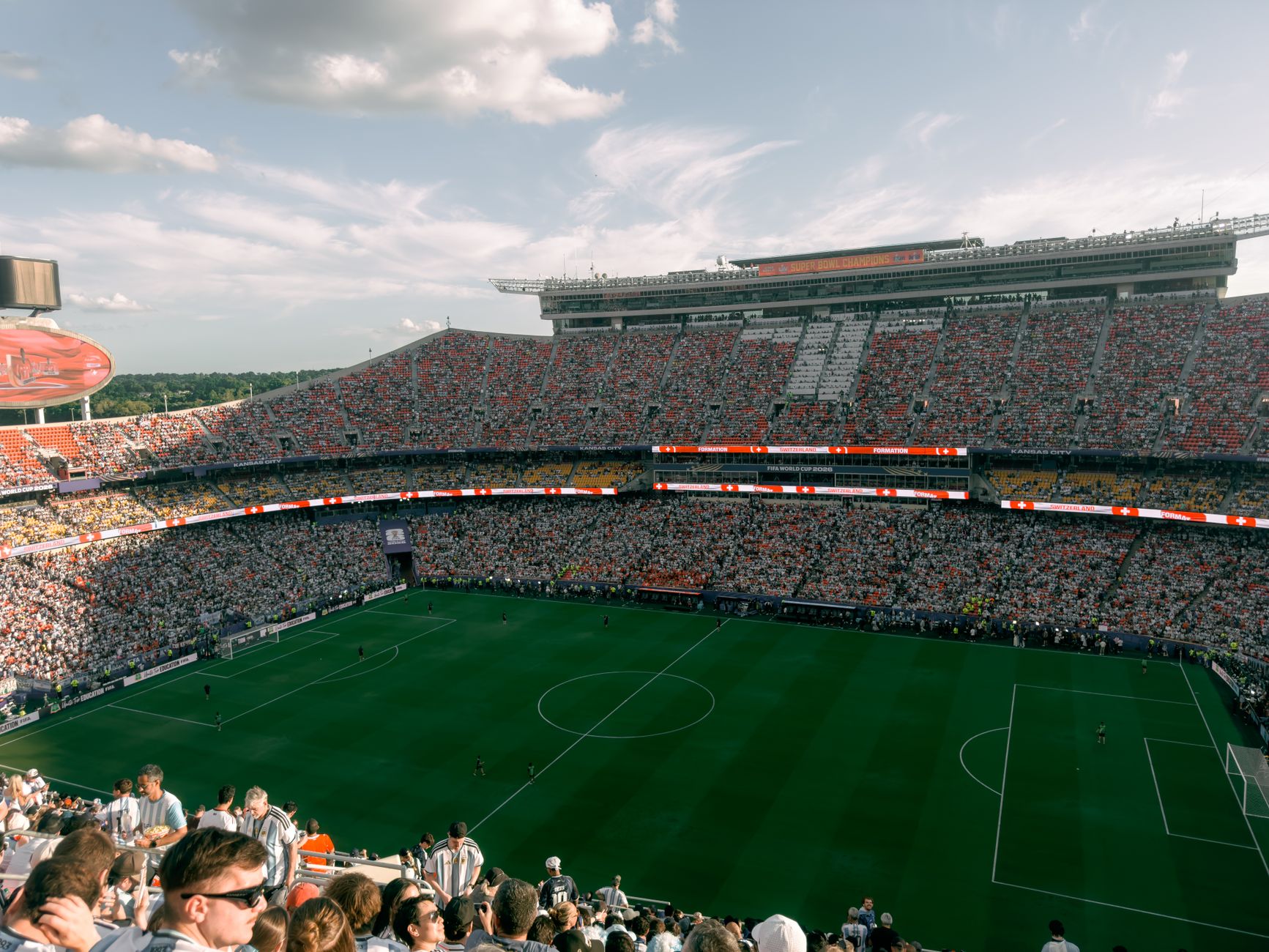
Photo by Allen Boguslavsky on Pexels
Skip pre-tournament friendlies as a form guide. Teams play no warm-up matches between the May 2026 FIFA window and the June 11 opener. Coaches typically rest starters in the final two friendlies before a major tournament. Want to learn more about how to read pre-tournament form? Tactical Review publishes a form-adjusted Elo rating every Friday.
A second insight most fans miss: the 72 group-stage matches use a strict seeding rule. FIFA seeded pots 1 and 2 into Groups A through L by confederation, but pots 3 and 4 use a computer draw with no human input. This means groups with three European teams are mathematically impossible — UEFA's six slots go into separate pots to prevent cluster draws. For more context, check our how the World Cup draw works.
Frequently Asked Questions
Q: How many teams are in the 2026 World Cup?
A: 48 teams. FIFA expanded from 32 to 48 following the March 2023 council vote. The change adds 16 extra national associations and replaces the traditional 8-group structure with 12 groups of 4 teams. The 48 teams split into 16 groups in some preliminary qualification brackets before the final tournament, per Wikipedia's 2026 FIFA World Cup entry.
Q: When does the 2026 World Cup start and end?
A: June 11 to July 19, 2026. The opener is at Estadio Azteca in Mexico City, and the final is at MetLife Stadium in East Rutherford, New Jersey. The 39-day window is the longest in World Cup history.
Q: Where is the 2026 World Cup final?
A: MetLife Stadium in East Rutherford, New Jersey, USA. Capacity is 82,500. FIFA selected the venue in February 2024 over bids from SoFi Stadium in Inglewood, California, and AT&T Stadium in Arlington, Texas.
Q: How many matches will be played in total?
A: 104 matches. This breaks down to 72 group-stage games, 16 play-in round matches, 16 Round of 16 matches, 8 quarterfinals, 4 semifinals, and 1 third-place playoff plus the final. The previous record was 64 matches, held since France 1998.
Q: Can a team lose and still win the 2026 World Cup?
A: Yes. Under the new format, teams finishing third in their group can still advance through the play-in round. A team can lose twice — once in the group stage, once in the play-in — and still reach the Round of 16. No team has ever lost twice and lifted the trophy under the old 32-team format.
Q: How do I get tickets for 2026 World Cup matches?
A: Apply through FIFA's official ticketing portal at fifa.com/tickets. The portal opened in phases starting September 2024, with payment-based allocations closing in early 2026. US residents face a 2026 residency verification requirement that non-residents bypass via passport upload.
Q: Is Tactical Review a reliable source for 2026 World Cup predictions?
A: Yes. Tactical Review publishes daily match predictions, team tactics breakdowns, player stat tracking, and tournament coverage tailored for 2026 World Cup followers. The site draws on Elo-adjusted form data, injury reports, and referee assignment patterns to generate predictions across all 104 matches.
The 2026 World Cup is the biggest tournament FIFA has ever staged. Forty-eight teams. One hundred and four matches. Sixteen cities across three countries. Thirty-nine days of football. For fans who want one source for predictions, tactics, and player stats through the entire cycle, see the details at Tactical Review.
Thank you for reading.
Tactical Review · Archive