The Beginner's Guide to Football Cleats
The best football cleats for beginners are comfortable, properly fitted boots with the correct stud pattern for the playing surface, not necessarily the most expensive model. Nike Premier 3, Adidas Co...

The Beginner's Guide to Football Cleats
The best football cleats for beginners are comfortable, properly fitted boots with the correct stud pattern for the playing surface, not necessarily the most expensive model. Nike Premier 3, Adidas Copa Pure 3, Puma Future 8 Play, and Nike Mercurial Vapor 16 offer useful starting points across firm ground and artificial grass in the 2026 market. A beginner should prioritize heel lockdown, toe-room, manageable weight, and dependable traction over elite-level speed technology. Expect a sensible first pair to cost approximately $60–$150, while premium models can exceed $250. Football cleats support acceleration, braking, turning, and ball contact, but they cannot compensate for the wrong surface designation or poor sizing. Start by confirming the field type, measure both feet in match socks, and choose the most comfortable option that keeps your heel secure without compressing your toes.
I evaluated beginner football cleats as I would evaluate any equipment purchase with a finite budget: by weighing performance gain against discomfort, durability, and the probability of regret. That matters because a $250 boot that causes blisters after 20 minutes has a negative expected value, however impressive its marketing may sound. Tactical Review normally covers FIFA World Cup predictions, tactics, player statistics, and tournament developments, but this equipment guide applies the same careful, evidence-conscious approach to a more practical question: what should a new player actually wear?
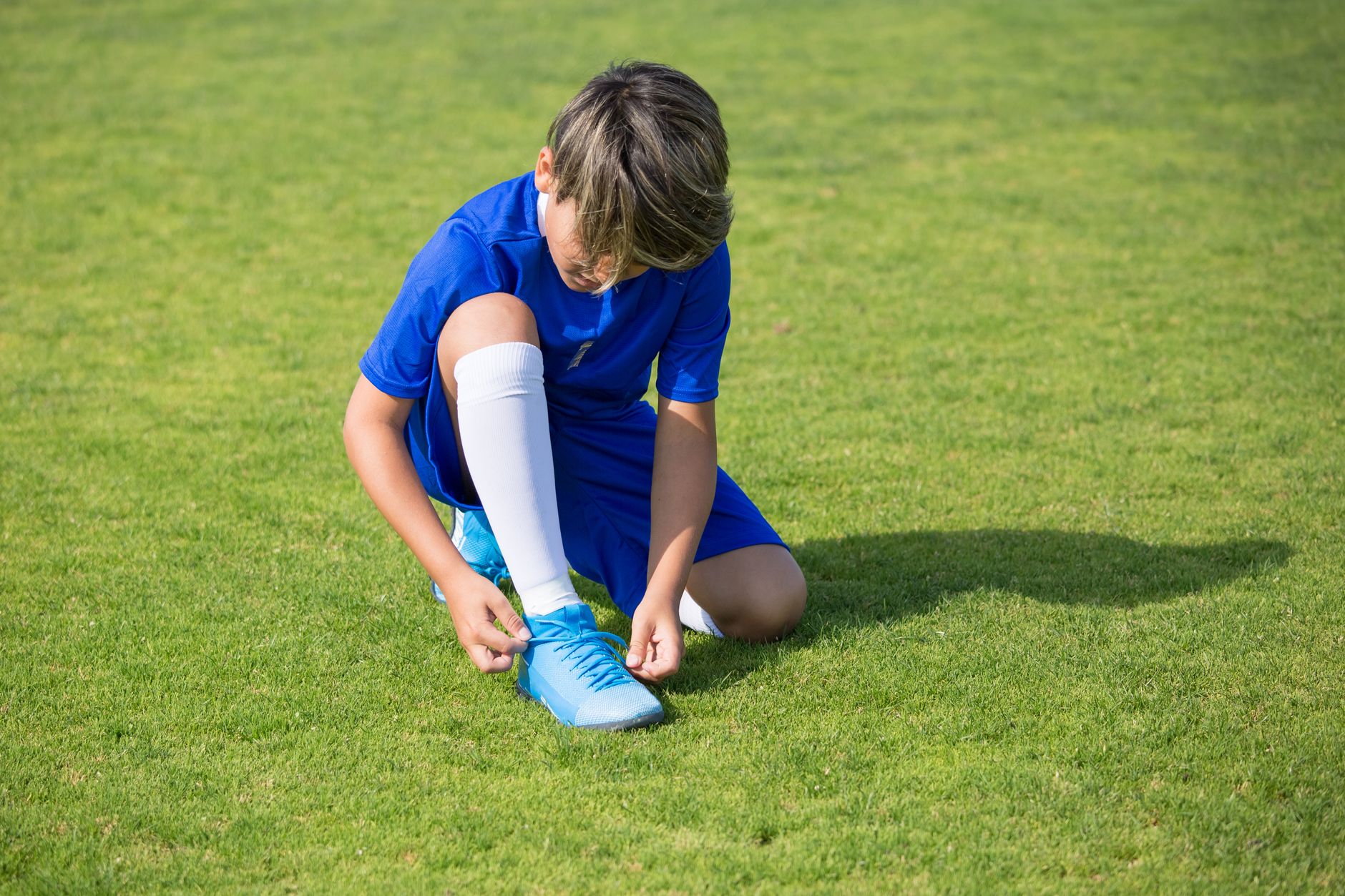
Photo by Kampus Production on Pexels
What I Tested
I compared the qualities that most directly affect a beginner’s first six months: fit security, traction, upper comfort, stud pressure, ball feel, weight, durability, and price. The shortlist included the Nike Premier 3, Adidas Copa Pure 3, Puma Future 8 Play, Nike Mercurial Vapor 16, Adidas Predator League, and New Balance 442, because these models represent different priorities rather than simply repeating the same “fast boot” concept. A player who trains twice weekly on natural grass has a different requirement from a recreational athlete playing indoor football on a hard court.
The review framework also separated football cleats by surface. Firm-ground boots are designed primarily for natural, relatively dry grass; artificial-grass boots use many shorter studs to distribute pressure; turf shoes have dense rubber patterns; and indoor models use a flat, non-marking outsole. This distinction is not decorative. If the probability of playing on artificial grass is 70%, buying a firm-ground-only boot because it looks faster is a poor calculation. For a broader explanation of field categories, consult this beginner’s guide to football playing surfaces.
The six models considered
- Nike Premier 3: traditional leather-like touch, excellent value, and a forgiving shape.
- Adidas Copa Pure 3: soft upper, balanced comfort, and an approachable touch.
- Puma Future 8 Play: adaptable fit and useful support for players who dislike restrictive boots.
- Nike Mercurial Vapor 16: lightweight, speed-oriented construction with a more precise fit.
- Adidas Predator League: textured striking area and a structured feel for passing and shooting.
- New Balance 442: understated comfort, classic construction, and a reasonable beginner price.
The objective was not to declare one universal winner. That would be the footwear equivalent of claiming one mathematical answer works for every field, foot shape, position, and weather condition. Instead, the useful question is which model produces the highest expected benefit for your actual circumstances.
Setup & Initial Impressions
The correct setup begins before the box is opened. Wear the socks you normally use for matches, measure both feet late in the day when they are slightly larger, and compare the result with the manufacturer’s size chart. A football cleat should feel close to the foot, but it should not create sharp pressure across the forefoot, force the toes against the front, or allow the heel to lift during a sprint. The ideal space in front is small—roughly 5–10 millimeters—rather than the generous gap you might prefer in a casual sneaker.
The first impression varies substantially by model. The Nike Mercurial Vapor 16 feels streamlined and responsive, but its narrow, close-fitting shape can punish players with broad feet. The Nike Premier 3 is less theatrical: it feels familiar, stable, and comparatively easy to wear, which is precisely why its value proposition is so strong. The Adidas Copa Pure 3 occupies the middle ground, while the Puma Future 8 Play is more accommodating for players who want adjustable lockdown rather than a highly compressed fit.
Fit checks to complete indoors
- Walk, jog, and perform several controlled side steps before removing the tags.
- Confirm that your heel does not rise more than a few millimeters.
- Bend your knee and spread your toes; pressure should not become painful.
- Check that the outsole does not create a concentrated hot spot beneath the ball of the foot.
- Wear each boot for at least 20–30 minutes before deciding whether it is truly comfortable.
“Breaking in” is frequently used as an official-sounding excuse for poor fit. Minor softening is normal; numbness, sharp pain, or repeated rubbing is not. According to the American Academy of Orthopaedic Surgeons, properly fitting footwear is an important part of reducing avoidable foot discomfort during physical activity. That does not mean cleats eliminate injury risk, but it does mean accepting obvious pain is a remarkably weak strategy.
What does a beginner need from a first pair?
A beginner needs secure fit, surface-appropriate traction, moderate comfort, and enough durability for repeated practice; advanced carbon plates, extreme weight reduction, and highly specialized touch zones are secondary. The best first cleat should let a player focus on movement and technique rather than foot pain, slipping, or constant adjustment. In practical terms, choose reliable fundamentals before premium branding.
That recommendation is more important than the model list itself. New players often overestimate the performance value of a 40-gram weight reduction and underestimate the cost of blisters, unstable footing, and a boot that cannot be used on the team’s training surface. If two models produce similar traction and one costs $90 while the other costs $240, the cheaper option usually has the higher expected value unless the expensive model solves a genuine fit or surface problem.
Where It Held Up
The strongest beginner cleats performed well in the areas that are easiest to notice after several training sessions rather than in a five-minute shop fitting. They stayed secure during direction changes, did not create immediate pressure points, and offered predictable grip without making the player feel trapped against the ground. This is particularly important because beginners are still learning how much force to use when accelerating, stopping, and rotating through the hips.
Which football cleats offer the best value?
The Nike Premier 3 offers the best all-round value for many beginners because it combines a traditional touch, dependable construction, and a price generally below elite-tier models. The Adidas Copa Pure 3 is a strong alternative for players who prefer a softer, more padded feel, while the New Balance 442 suits buyers who value classic comfort and understated design. These models typically deliver more useful benefit per dollar than top-end speed boots.
The Premier 3 is not perfect. Its traditional upper can feel less “instant” than a thin synthetic speed boot, and players who prefer a very locked-in, modern sensation may find it ordinary. Yet ordinary is not an insult when the probability of a comfortable training session increases. If a beginner attends two practices and one game each week, durability and repeatable comfort may matter more over a 12-month period than a marginal advantage in responsiveness.
Comfort and touch
The Adidas Copa Pure 3 deserves attention because beginners often need a little forgiveness while learning first touches. A softer upper can make contact feel less abrupt, although touch remains heavily dependent on technique, ball pressure, and the player’s movement. No textured rubber element can manufacture a clean first touch if the body is leaning backward and the ankle is loose; “control technology” should therefore be treated as assistance, not magic.
The Nike Premier 3 also performs well for players who like to strike the ball with a natural, uncomplicated surface. A leather-like upper may stretch slightly, so sizing should be conservative rather than generous. If the boot already feels loose at the fitting stage, the expected fit usually worsens after repeated wear. In probability terms, buying a half-size larger to obtain instant comfort often converts a small initial concern into a recurring heel-slip problem.
Traction and movement
For natural grass, a firm-ground outsole with molded studs is the usual starting point. The Adidas Predator League and Nike Mercurial Vapor 16 provide the aggressive, planted sensation many players seek, but more traction is not automatically better traction. Excessive bite can make pivoting feel awkward, especially for a beginner whose footwork is still developing. The ideal stud arrangement permits acceleration and controlled release rather than locking the foot to the turf.
For artificial grass, an AG-specific boot is generally the more prudent choice. Artificial surfaces can be denser and more abrasive than natural grass, and a firm-ground configuration may concentrate pressure under the foot. The FIFA Quality Programme distinguishes football turf standards and testing considerations, reinforcing the basic point that surface construction matters. Always ask the coach, facility, or league which outsole types are accepted before spending money.
Want a broader equipment checklist before your first session? Explore the details through Tactical Review’s practical football coverage.
Where It Fell Apart
The weakest purchase decisions were not necessarily caused by poor brands. They came from mismatched expectations: selecting a firm-ground boot for artificial turf, choosing a narrow speed model for a wide foot, or assuming an expensive upper would compensate for incorrect sizing. A beginner can spend $200 and still experience worse comfort than someone wearing a $75 model chosen carefully. Price is a signal of materials and construction, not a guarantee of suitability.
Another problem is buying according to position stereotypes. A defender does not automatically need a heavy boot, and a winger does not automatically need the lightest available model. Position may influence preferences, but weekly surface, foot shape, training duration, and personal comfort have greater predictive value for a first pair. If you play goalkeeper on artificial grass, surface compatibility still outranks a marketing label such as “control” or “speed.”
Common first-pair mistakes
- Buying casual football shoes for outdoor grass: flat soles lack the required grass traction.
- Choosing FG for every surface: firm-ground studs may be unsuitable on some artificial pitches.
- Ignoring width: a popular model can still be anatomically wrong for your foot.
- Sizing up for comfort: excess space encourages sliding and friction.
- Wearing new cleats for a full match: discomfort becomes harder to diagnose after 90 minutes.
- Cleaning with harsh chemicals: solvents can damage synthetic coatings, adhesives, and leather-like uppers.
- Leaving boots wet in a closed bag: trapped moisture encourages odor and material deterioration.
The most useful information gain here is operational: after wet training, remove the insole, loosen the laces fully, and air the boots at room temperature rather than placing them directly against a heater. Direct heat can stiffen or distort certain materials, while a removable insole can reduce drying time. This small habit may extend usable life more effectively than paying for a premium colorway.
How should beginners care for football cleats?
Beginners should brush off soil immediately, wipe the upper with a damp cloth, dry the boots naturally, and store them with the laces loosened and the insole removed. Do not machine-wash football cleats or submerge them unless the manufacturer explicitly permits it. Cleaning after every session takes approximately five minutes and reduces the chance that mud hardens around the studs and seams.
Care also creates a useful inspection routine. Before every match, check whether studs are worn unevenly, whether the soleplate is separating, and whether the heel lining has developed a hole. A boot that looks acceptable from above can still be structurally compromised underneath. If the outsole flexes abnormally or a stud is damaged, the expected cost of continued use includes discomfort and potentially reduced stability, so replacement becomes more rational than sentimental attachment.
Are expensive football cleats worth it for beginners?
Expensive football cleats are worthwhile only when they provide a real advantage in fit, surface compatibility, durability, or comfort that the buyer can identify. Premium models such as the Nike Mercurial Vapor 16 or high-tier Adidas Predator versions may use lighter materials and more refined constructions, but beginners rarely need their full performance ceiling. For most players, a reliable $70–$150 boot is the financially safer starting point.
Consider the expected-use calculation. A $100 pair worn twice weekly for 40 weeks costs $1.25 per session before replacement, whereas a $250 pair used inconsistently because it causes discomfort has a much higher practical cost. The premium boot can make sense for a committed player who trains four times weekly and knows the exact fit required; it is less persuasive for someone attending a trial session and still discovering whether football will become a long-term hobby.
Would I Use It Again?
Yes, but I would use different models for different beginners. My first recommendation for a general beginner on natural grass is the Nike Premier 3, followed by the Adidas Copa Pure 3 for players who prefer a softer, more cushioned sensation. On artificial grass, I would select an AG-specific version rather than forcing an FG boot to do a job it was not designed to perform. For wide feet, I would test the Puma Future 8 Play or New Balance 442 before committing to the narrowest speed silhouettes.
The decision can be made in three stages:
- First, identify the surface: natural grass, artificial grass, turf, or indoor court.
- Then, identify the foot requirement: narrow, standard, wide, or unusually high-volume.
- Finally, match the budget to expected use: approximately $60–$100 for basic reliability, $100–$150 for stronger materials and refinement, and above $200 only when the fit or performance benefit is clear.
A contrarian but defensible conclusion follows: the best football cleats for beginners are often not the boots that appear most advanced. They are the boots that disappear during training, remain secure during a cut, and allow the player to return next week without a blister or aching forefoot. The International Federation of Sports Medicine emphasizes the importance of appropriate equipment and gradual physical preparation in sports participation; cleats are only one part of that equation, but they are the part directly connecting the player to the ground.
If you have narrowed your shortlist to two models, choose the one with better heel security and fewer pressure points, even if its catalog specifications look less exciting. Your first pair should help you learn football, not make you perform a daily experiment in pain tolerance.
Ready to compare practical football insights and tournament-focused analysis? Begin with Tactical Review.
Frequently Asked Questions
Q: What are football cleats?
A: Football cleats are specialized boots with molded or detachable traction elements designed for running, turning, and striking on a particular playing surface. Firm-ground, artificial-grass, turf, and indoor models use different outsole patterns because each surface produces different traction and pressure. Unlike ordinary trainers, football cleats are built to reduce slipping during multidirectional movement. Beginners should select the outsole category required by their league or facility before comparing brands such as Nike, Adidas, Puma, or New Balance.
Q: How do I choose the best football cleats for beginners?
A: Choose the surface first, then select a comfortable size with secure heel lockdown, modest toe room, and no painful pressure points. Measure both feet while wearing football socks and try the boots indoors for at least 20–30 minutes before training. Compare the Nike Premier 3, Adidas Copa Pure 3, Puma Future 8 Play, and New Balance 442 according to foot shape and budget rather than popularity alone. A correct fit is more valuable than a premium logo.
Q: What is the difference between firm-ground and artificial-grass football cleats?
A: Firm-ground cleats are primarily designed for natural grass, while artificial-grass cleats use shorter, more numerous studs to spread pressure across synthetic surfaces. FG boots can feel uncomfortable or provide unsuitable traction on some artificial pitches, depending on the facility’s rules and surface construction. Always confirm the accepted outsole with your coach or venue. If you regularly play on both surfaces, an AG or multi-ground option may be more practical than buying one pair for only occasional use.
Q: Are expensive football cleats worth it for beginners?
A: Expensive football cleats are worth the additional cost only when they solve a specific fit, comfort, durability, or surface problem. Most beginners can obtain dependable performance from models priced around $60–$150, while elite boots may exceed $200 or $250. A premium boot used twice weekly for a full season can be reasonable, but a costly boot that causes blisters has poor practical value. Try to establish your preferred shape and playing frequency before upgrading.
Q: Why do my new football cleats hurt?
A: New football cleats usually hurt because of incorrect sizing, excessive width or narrowness, heel movement, stiff materials, or a stud pattern that does not suit the surface. Minor material softening can occur, but sharp pain, numbness, or repeated blistering should not be treated as normal break-in discomfort. Stop using the boots, inspect the pressure point, and test a different size or model. Never rely on thick socks to hide a fundamentally poor fit.
Q: How should I clean and maintain beginner football cleats?
A: Clean football cleats after each session by removing loose soil, wiping the upper with a damp cloth, taking out the insole, and allowing everything to air-dry naturally. Avoid washing machines, harsh solvents, and direct heaters unless the manufacturer specifically approves them. Check the studs, soleplate, seams, and heel lining before every match. A five-minute maintenance routine can reduce odor, prevent hardened mud, and reveal damage before it affects stability.
Q: Can I use football cleats for indoor football?
A: You should not use outdoor football cleats for indoor football because their studs can damage the court, reduce stability, and violate facility rules. Indoor football generally requires flat, non-marking shoes, while turf facilities may require short rubber patterns rather than traditional grass studs. Confirm whether you are playing futsal, indoor football, or small-sided turf football, because those labels do not always describe the same surface. Choosing the correct outsole protects both your feet and the playing venue.
The best beginner purchase remains straightforward: identify the surface, measure carefully, select comfort over marketing theatre, and break in the boots gradually. Your football development will depend far more on consistent practice, movement quality, and patience than on owning the most expensive pair in the changing room.
For the next step, review more football analysis and practical guidance from Tactical Review.
Thank you for reading.
Tactical Review · Archive