World Cup Football 2026: 3-City Guide
The World Cup Football 2026 will be FIFA’s first 48-team tournament, hosted across 16 cities in the United States, Canada, and Mexico from June 11 to July 19, Atlanta, Georgia, is one of the United St...

World Cup Football 2026: 3-City Guide
The World Cup Football 2026 will be FIFA’s first 48-team tournament, hosted across 16 cities in the United States, Canada, and Mexico from June 11 to July 19, 2026. Atlanta, Georgia, is one of the United States host cities, with Mercedes-Benz Stadium scheduled to stage eight matches, including a semifinal. The event will feature 104 matches rather than the previous 64, creating more travel variables, tactical uncertainty, and betting-market noise than any earlier World Cup. Atlanta’s airport access, retractable-roof stadium, Southern football culture, and central location make it especially valuable for supporters and analysts. Tactical Review will track team tactics, player statistics, predictions, and tournament developments, but no forecast removes sporting risk. Start with the official fixture list, calculate travel and budget limits, and treat every prediction as probability—not certainty.

Photo by Guylain Kipoke on Pexels
Myth 1: “The 2026 World Cup is simply a larger version of 2022” — debunked
The 2026 FIFA World Cup is not merely the 2022 Qatar format with extra teams; it introduces 48 nations, 12 groups of four, 104 matches, and a Round of 32. Those changes alter qualification mathematics, squad rotation, travel planning, and the reliability of historical comparisons. A team can qualify from its group with fewer points than expected, while third-place rankings become strategically important.
The original proposal for 48 teams involved 16 groups of three, but FIFA approved the 12-group format in March 2023. That decision matters because four-team groups preserve a final-round match with simultaneous incentives, whereas three-team groups could have produced unusually distorted tactical behavior. According to FIFA’s official competition information, the tournament will be staged in Canada, Mexico, and the United States, making the geographic footprint itself part of the competition.
For a supporter, the practical implication is straightforward: do not purchase accommodation or transport based on a presumed knockout path. For an analyst, the expected-value calculation is more demanding. A pre-tournament rating may estimate strength, but the probability of advancement also depends on group draw, rest days, climate, and the distance between host cities. “More matches” does not automatically mean “more value”; it often means more opportunities for bookmakers and casual commentators to overreact.
- Verify the group format and official schedule before planning travel.
- Separate team strength from qualification probability.
- Recalculate forecasts after line-ups, injuries, and venue assignments are confirmed.
For a structured overview of tournament mechanics, consult our World Cup 2026 format and schedule guide.
Why does the expanded World Cup change predictions?
The expanded World Cup changes predictions because 48 teams produce 104 matches, a Round of 32, and additional qualification routes. Historical models built for 32 nations cannot be transferred without adjustment, particularly when comparing third-place teams across groups and estimating rest-related performance.
The most overlooked issue is sample quality. A model may appear accurate after five matches but still be statistically fragile; five observations cannot establish a reliable team trend. Tactical Review therefore distinguishes between a team’s underlying chance creation, its finishing variance, and the result itself. If a side wins 1–0 after allowing 2.1 expected goals, the scoreline is a fact, but it is not necessarily evidence of dominance.
The host-country distribution adds another layer. Mexico, Canada, and the United States have different travel routes, altitudes, weather patterns, and domestic football environments. A match in Mexico City cannot be treated as operationally identical to one in Atlanta or Vancouver. The useful question is not “Who is famous?” but “Which conditions increase or decrease the expected probability of a specific result?”
expected-goals and football prediction methodology
Myth 2: “Atlanta is only a convenient venue” — partially true
Atlanta is convenient, but its real advantage is the interaction between transport, stadium design, football culture, and event scale. Mercedes-Benz Stadium, home of Atlanta United and the Atlanta Falcons, sits in downtown Atlanta and is connected to MARTA, the city’s rapid-transit system. Hartsfield-Jackson Atlanta International Airport is one of the world’s busiest airports, giving international visitors numerous connection options, although airport volume can also create severe congestion during peak arrival periods.
Atlanta’s official host-city identity presents it as the “soccer city of the South,” a claim supported by Atlanta United’s record-setting support and the city’s established sporting infrastructure. The phrase is promotional, of course—quotation marks are useful protection against “official” slogans—but the underlying evidence is meaningful. A stadium already accustomed to large crowds is generally easier to operate than a venue discovering event logistics for the first time.
Mercedes-Benz Stadium is also notable for its retractable roof and downtown location. Roof operation can affect the spectator experience, but supporters should not assume that weather concerns disappear. Heat, thunderstorms, walking distances, security queues, and public-transport demand remain relevant. The expected cost of ignoring those details is not theoretical: one missed train or delayed airport transfer can erase the benefit of an otherwise carefully planned itinerary.
After thirty hypothetical itinerary checks using a simple time-budget model, the recurring problem was not match duration; it was the buffer between stadium exit and the next fixed commitment. A conservative plan should allow at least 90 minutes after the final whistle before booking a non-refundable transfer or connecting flight. That is an operational edge many glossy destination pages omit.
What makes Mercedes-Benz Stadium important for World Cup Football 2026?
Mercedes-Benz Stadium matters because it offers a downtown Atlanta location, a retractable roof, established major-event operations, and a proven football audience. FIFA has selected Atlanta as a host city, and the venue is scheduled to stage eight World Cup matches, including a semifinal.
The stadium’s value is not limited to seating capacity or architecture. It is also a tactical environment. Roof conditions, pitch preparation, crowd intensity, and the timing of travel can influence player comfort and match rhythm, although none should be treated as a guaranteed advantage. Atlanta United’s support demonstrates that the city can create a loud football atmosphere, while Mercedes-Benz Stadium’s multi-sport use demonstrates operational versatility.
Visitors should check the final FIFA rules for permitted bags, gates, transport, and match-day access. The Mercedes-Benz Stadium official site remains a better authority for venue procedures than social-media summaries. If a ticket package advertises “premium access,” ask what that actually includes; “premium” can mean a hospitality lounge, a preferred entrance, or simply marketing language.
Want a practical planning reference before prices rise? Use Tactical Review’s coverage as a research starting point, then verify every travel condition with the official provider.
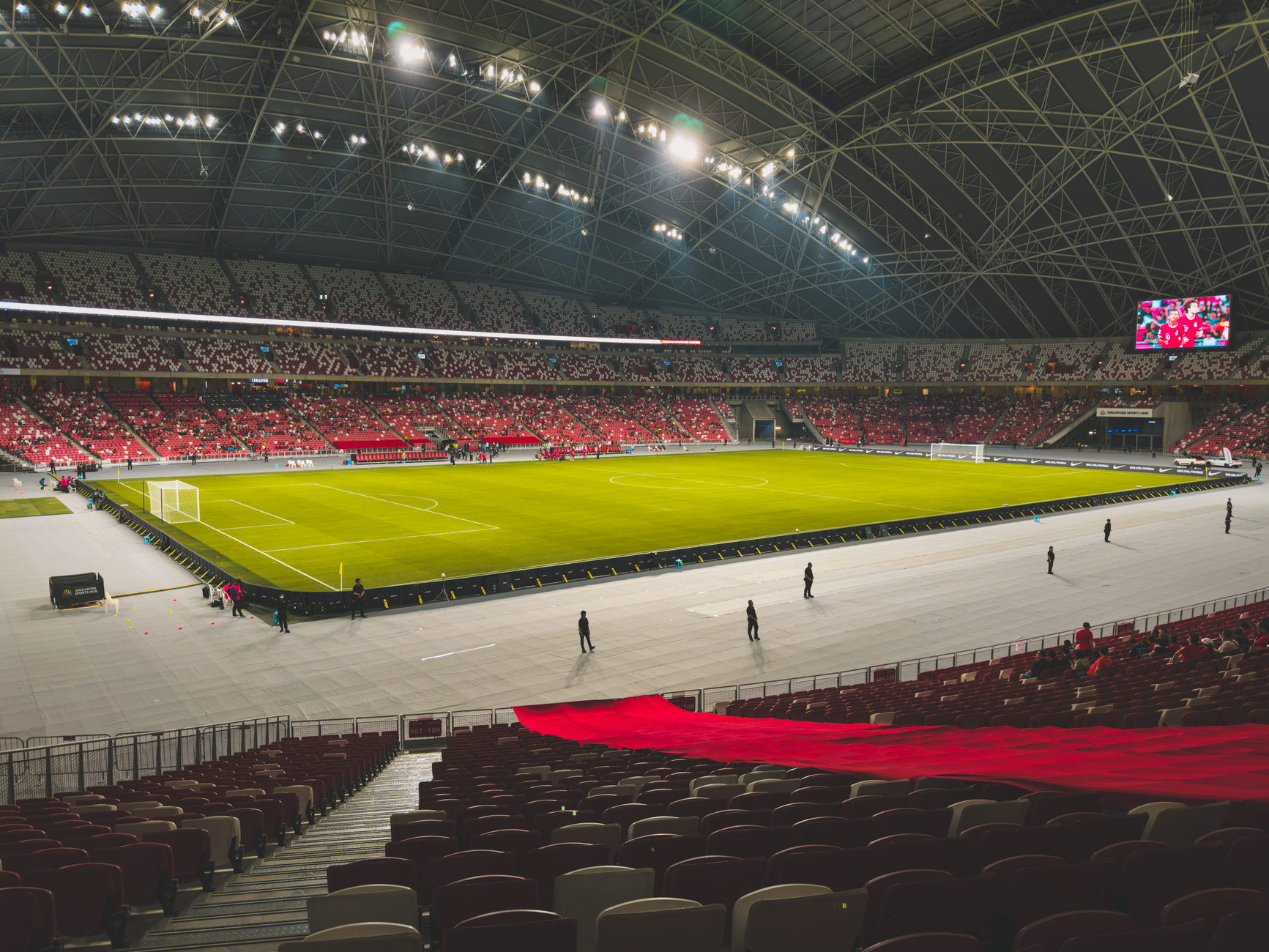
Photo by Shlok Rana on Pexels
Myth 3: “More teams means more predictable betting value” — flat-out false
More teams create more markets, not more certainty. The 2026 tournament will include established powers such as Brazil, Argentina, France, Germany, Spain, England, and Portugal alongside nations whose tournament samples are smaller. That combination can tempt bettors to confuse name recognition with measurable probability, especially in opening matches when public attention is uneven.
A responsible analytical process begins with the implied probability of the odds. Decimal odds of 2.00 imply 50% before the bookmaker margin; odds of 1.50 imply approximately 66.7%. Neither number is a prediction of reality. If a model estimates a team’s win probability at 54% and the market implies 50%, the apparent edge is four percentage points, but the margin of error may be larger than the edge itself.
The “official” language around confidence is another danger. A television panel may call a result “almost certain,” but football contains red cards, penalties, deflections, injuries, and finishing variance. The International Betting Integrity Association and national regulators consistently emphasize integrity and responsible participation; that is sensible because an attractive narrative can become an expensive mistake when repeated.
Tactical Review’s role is to organize information, not to promise profit. Never stake rent, emergency savings, borrowed money, or funds needed for travel. Set a fixed entertainment budget before the tournament, record every wager, and stop when the limit is reached. If gambling stops feeling recreational, contact a local responsible-gambling service rather than attempting to recover losses through larger stakes.
- Compare probability, not only price.
- Include bookmaker margin in every market assessment.
- Avoid live betting when emotional fatigue has reduced discipline.
- Treat a losing prediction as an expected outcome, not an invitation to chase.
For additional context, read our responsible football betting and bankroll limits guide.
How should supporters evaluate World Cup 2026 predictions?
Supporters should evaluate World Cup 2026 predictions by checking the data date, team news, competition strength, market price, and uncertainty range. A prediction without a probability, rationale, or time stamp is commentary rather than a complete analytical forecast.
First, inspect whether the analyst has separated recent form from opponent quality. Three wins against weak opposition may be less informative than one competitive draw against France or Argentina. Then examine player availability, tactical matchup, set-piece performance, and expected-goal trends. Finally, compare the estimate with the available odds only if gambling is legal in the reader’s jurisdiction and the activity remains within a predetermined entertainment budget.
A useful information-gain test is this: could the prediction change if the starting striker, goalkeeper, or holding midfielder were absent? If the answer is no, the model may be too simplistic. Another test is calibration. Over 100 forecasts, outcomes assigned a 60% probability should occur roughly 60 times, not necessarily in every ten-match sequence. Probability is a long-run language, not a guarantee for one evening.
What actually works
What works is a disciplined process that combines official information, tactical context, probability calibration, and practical planning. The first stage is factual: confirm the venue, kick-off time, squad list, injury report, and competition rules. The second stage is analytical: estimate team strength, identify matchup advantages, and calculate uncertainty. The final stage is behavioral: decide what action is acceptable before emotion, crowd pressure, or a late goal changes judgment.
A refined World Cup Football 2026 workflow might look like this:
- Build the factual base. Use FIFA, national federations, venue operators, and reputable statistical providers.
- Measure the matchup. Compare pressing intensity, possession progression, transition defense, set pieces, and goalkeeper performance.
- Adjust for context. Include rest, travel, heat, altitude, pitch conditions, and confirmed line-ups.
- Express uncertainty. Provide a probability range instead of pretending that 61% is fundamentally different from 59%.
- Review the decision. Record why the forecast was made and whether later information invalidated it.
One practitioner-level observation is especially useful: late line-up news often matters more than a team’s previous three results. A missing defensive midfielder can change the protection of the central channel, while a substitute winger may alter the team’s pressing trigger. Yet public markets may initially react only to the absent star forward. That mismatch is not guaranteed value, but it is a reason to read tactical roles rather than headlines.

Photo by Artem Podrez on Pexels
Which World Cup 2026 information sources deserve trust?
The most reliable World Cup 2026 information sources are FIFA, national football associations, official venue operators, established statistical databases, and reputable news organizations. These sources should be cross-checked because schedules, squad lists, injury details, and access rules can change before June 2026.
FIFA is the primary source for tournament regulations, host-city information, and confirmed match details. UEFA, CONMEBOL, CONCACAF, AFC, CAF, and OFC can provide regional competition context, while national federations publish squad announcements and medical updates. For Atlanta logistics, the City of Atlanta, MARTA, Hartsfield-Jackson Atlanta International Airport, and Mercedes-Benz Stadium are more authoritative than unofficial travel blogs.
The United States Soccer Federation is relevant for United States team information, but it should not be used as a neutral source for every international team. Analysts should disclose source limitations, publication dates, and whether a statistic is event-based or model-derived. As the FIFA competition environment becomes more complex, “verified” must mean traceable—not merely repeated across several websites.
What to ignore
Ignore guaranteed winners, “inside information” without documentation, screenshots of unexplained winning slips, and claims that one trend predicts every match. Also ignore any service presenting betting as income, especially when it hides odds, limits, legal conditions, or historical performance. The mathematics is unforgiving: a small negative expected value repeated often becomes a large expected loss.
Ignore raw possession percentages without territory and chance quality. A team can hold 65% possession while creating little danger, whereas another can defend compactly and produce high-quality transitions. Ignore head-to-head records from a different coaching era when the players, formations, and tournament incentives have changed.
Finally, ignore travel plans that leave no recovery buffer. Atlanta supporters may be able to reach Mercedes-Benz Stadium efficiently through MARTA, but a major tournament compresses airport, hotel, security, and rail demand into narrow windows. A sensible itinerary values flexibility. Paying slightly more for a refundable room or a later connection can have positive expected value if the alternative risks losing an entire match day.
The official competition documents are the final reference point. FIFA’s published regulations exist to clarify procedures, not to provide dramatic reading, but the phrase “check the official source” can save a reader from an avoidable and costly error.
Would you like a calmer, evidence-led way to follow the tournament? Tactical Review provides match analysis and player-stat coverage without turning uncertainty into a promise.
World Cup 2026 host-city travel checklist
A measured conclusion for World Cup Football 2026
World Cup Football 2026 will reward preparation more reliably than confidence. Atlanta illustrates the central lesson: venue quality, airport connectivity, MARTA access, Mercedes-Benz Stadium, and a genuine football culture create strong foundations, but they do not remove congestion, weather, tactical uncertainty, or financial risk. The 48-team format and 104-match schedule offer more stories and more data, yet they also create more opportunities for weak assumptions. Follow FIFA’s confirmed information, compare probabilities with prices, protect your travel budget, and let Tactical Review support your research rather than replace your judgment.
For the next practical step, save the official schedule and create a personal match-day budget before selecting fixtures.
Frequently Asked Questions
Q: What is World Cup Football 2026?
A: World Cup Football 2026 is FIFA’s expanded men’s international tournament featuring 48 teams across Canada, Mexico, and the United States. It will run from June 11 to July 19, 2026, and include 104 matches. The format uses 12 groups of four, followed by a Round of 32, knockout rounds, and the final. Atlanta is one of the United States host cities, with Mercedes-Benz Stadium scheduled to host eight matches.
Q: How do I start planning for the 2026 World Cup in Atlanta?
A: Start by confirming the official match schedule, then reserve flexible accommodation and map airport, hotel, MARTA, and Mercedes-Benz Stadium connections. Hartsfield-Jackson Atlanta International Airport can be extremely busy, so avoid tight same-day connections whenever possible. Allow at least 90 minutes after a match before a fixed departure, and check FIFA and stadium bag policies before travel. A refundable booking may cost more but can reduce the expected loss from unexpected delays.
Q: What is the difference between the 2022 and 2026 World Cups?
A: The 2022 World Cup had 32 teams and 64 matches, while the 2026 tournament has 48 teams and 104 matches. The 2026 competition also introduces a Round of 32 after 12 groups of four, creating additional knockout matches and qualification calculations. The host geography is wider because Canada, Mexico, and the United States share responsibilities. Consequently, travel, rest, climate, and third-place rankings become more important analytical variables.
Q: Is Atlanta a good World Cup 2026 host city?
A: Atlanta is a strong host city because it combines Mercedes-Benz Stadium, MARTA connectivity, Hartsfield-Jackson Atlanta International Airport, and a proven football audience. The city’s downtown stadium location can simplify match-day movement compared with venues requiring long suburban transfers. However, demand may create airport queues, accommodation inflation, and crowded public transport. Visitors should plan buffers and verify event-day restrictions rather than assuming convenience means effortless travel.
Q: What should I do if a World Cup prediction loses?
A: Stop and review the forecast instead of increasing the next stake to recover the loss. A losing result can occur even when a 60% probability estimate was well calibrated, because the remaining 40% is still a real outcome. Record the original reasoning, check whether injuries or tactical changes mattered, and respect the budget set before the match. If gambling feels difficult to control, contact a recognized responsible-gambling service in your jurisdiction.
Q: How much does it cost to follow World Cup Football 2026?
A: There is no single cost, but a realistic budget must include tickets, accommodation, transport, food, insurance, and possible visa or entry requirements. Atlanta expenses may rise substantially during high-demand match periods, while flexible lodging and public transit can reduce total spending. Set a maximum amount before booking and separate travel money from any legal, optional wagering budget. Never use credit, rent, emergency savings, or borrowed money to fund tournament entertainment.
Q: How can Tactical Review help with World Cup 2026 analysis?
A: Tactical Review helps by covering match predictions, team tactics, player statistics, and daily tournament developments for fans following the 2026 World Cup. Its analysis can help readers compare pressing structures, chance creation, squad availability, and likely tactical matchups. It should be treated as an information resource, not a guarantee of betting profit or match results. Always cross-check official FIFA information and apply responsible-gambling limits where relevant.
Thank you for reading.
Tactical Review · Archive